Record 00  ·  system5.dev

You shipped something real. Now make it hold.

A real customer already pays for what you built, and that is the hard part done. Then the speed stops arriving: the same tools that got you here start multiplying whatever is already in the code — the good parts and the bad — and every new thing costs more than the last. That is the point we are for. One month, on top of what runs today, and nothing rebuilt from zero.

Ask for the teardown See the numbers

The teardown is a document, not a call. It costs nothing and it obliges nothing.

Ink drawing: one person working alone at a desk late at night by the light of a single screen, with the thing they finished sitting on the desk beside them.
You built it on your own. That part is done.
What you have
A working product, a customer paying for it, a team of up to five
What changed
Shipping got slower, not faster
What we keep seeing
Everyone handed an AI, most using a tenth of it — while competitors who use it fully pull ahead
What we do
Add what it is missing in one month, on top of what already runs
Price
Fixed, named after the teardown  ·  one month  ·  teardown $0
The whole page, spoken. Two minutes fifty, no sign-up, nothing to book. Slides: deck.html

Record 01record.type = one case
unit = usd, months
n = 1, not a market rate

One founder, two quotes, and what he did instead

These are one client’s numbers, not an industry average. We show them because we have seen both quotes, and because the gap is the entire argument we are making.

What two engineering shops quoted one founder for a rewrite, beside what he did instead
Field What he was quoted What he did instead
Price $150,000+ Fixed, named after the teardown
Time 4–6 months One month
The plan Start again from zero Keep the code, add what it was missing
His product meanwhile Nothing new to ship until the rebuild landed He kept shipping through the month
Where the number comes from Two written quotes, which he showed us Fixed exit date, agreed before the first invoice

$150,000+ is not our estimate of what a rewrite costs. It is what two engineering shops put in front of one founder, in writing, for his product. Yours might be quoted half of that, and a rewrite is sometimes the right call. The point is not the size of the number — it is that starting again was presented to him as the only option, and it was not.

Record 02record.type = case
identity = withheld
outcome = no interruption

One week to build it. One month to make it hold.

A founder built his product in about a week, with AI doing most of the typing. It worked, and a large customer signed on the strength of it.

  • Ink drawing: a person at a desk putting a small structure together out of sheets of paper at speed, sheets still in the air around them.
    One week, on his own, and it worked.
  • Ink drawing: the same person handing a small document across a desk to a much larger seated figure in a suit, who takes it.
    A large customer signed.
  • Ink drawing: two figures in suits standing over a table, shaking their heads at a drawing, one holding an estimate that unrolls to the floor.
    Two shops read the code and quoted a rewrite.
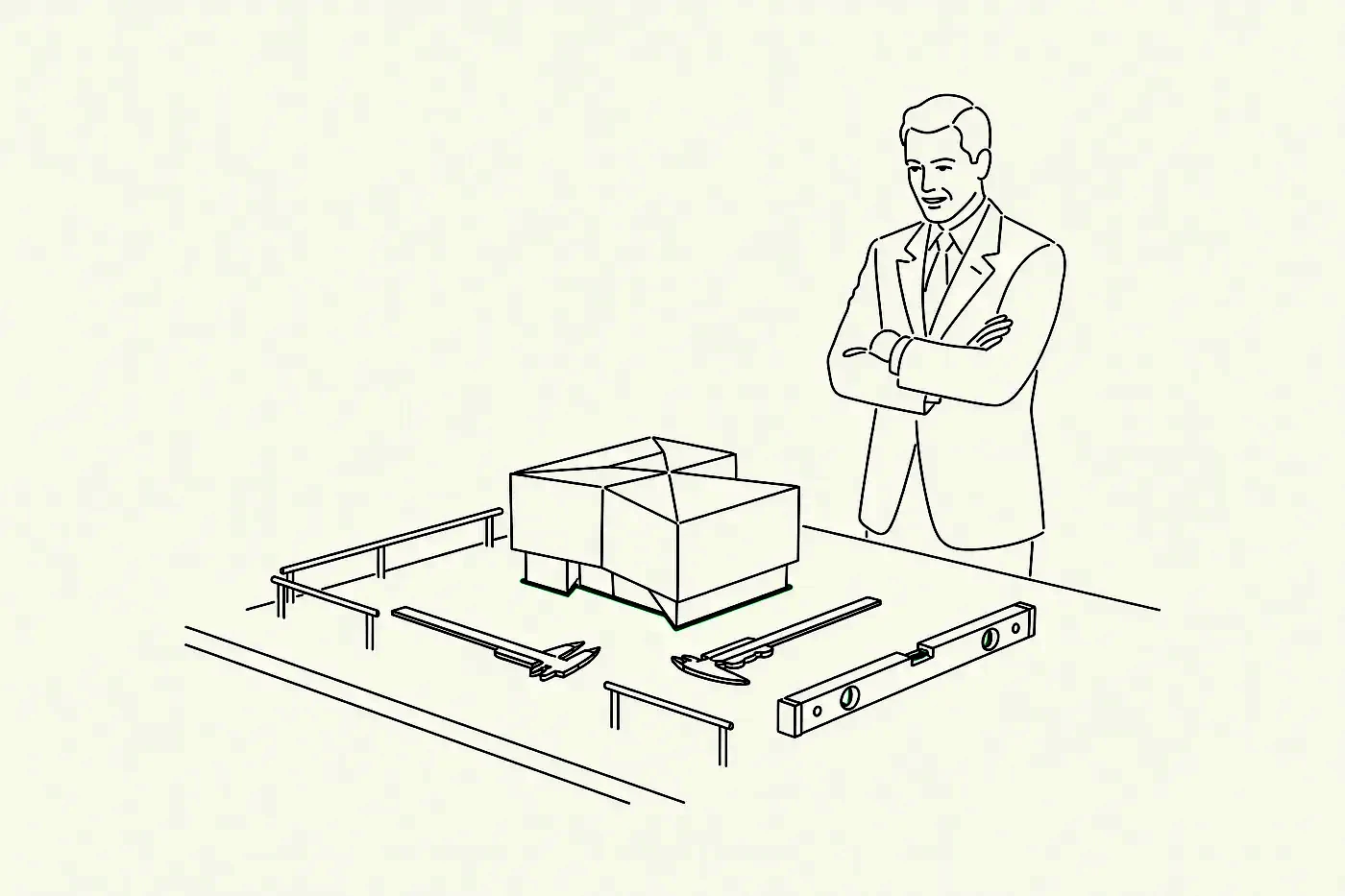
  • Ink drawing: the same paper structure standing on a plinth, braced and surrounded by measuring instruments, intact.
    One month later it holds. Nothing was rebuilt.
What happened next

Two engineering shops looked at the code, and both came back with the same answer: start again from zero.

What he did instead

He did not start again. In one month we took out everything the product did not need, put tests around what was left, and made it carry the load the new customer brought.

Result

His customer never saw an interruption. Nothing was rewritten.

Detail withheld

This one stays unidentifiable at the founder's request. We name neither him nor his customer, and we do not give the field, the country or the size of either. If you want the shape of the work in more detail, write and we will walk you through it with the identifying parts left out.

Record 03record.type = plan
duration = 1 month
steps = 4

What actually happens in the month

Four steps, in this order, on the release rhythm you already have.

  1. Before anything · $0

    Teardown

    We read the running code. You get a written assessment: what breaks first, at what load, what that costs, and what one month would change. It is a finished piece of work, not a meeting, and it is yours to keep whether or not you go further.

    Ink drawing: an engineer at a desk reading a large unfolded technical drawing through a magnifying glass and writing notes in an open notebook beside it.
    We read the code before anyone quotes a price.
  2. Week one

    We write down the ending

    Before the first invoice we agree what will be true on the last day, and what that day is. Then we take out the parts nothing depends on, so there is less to hold up.

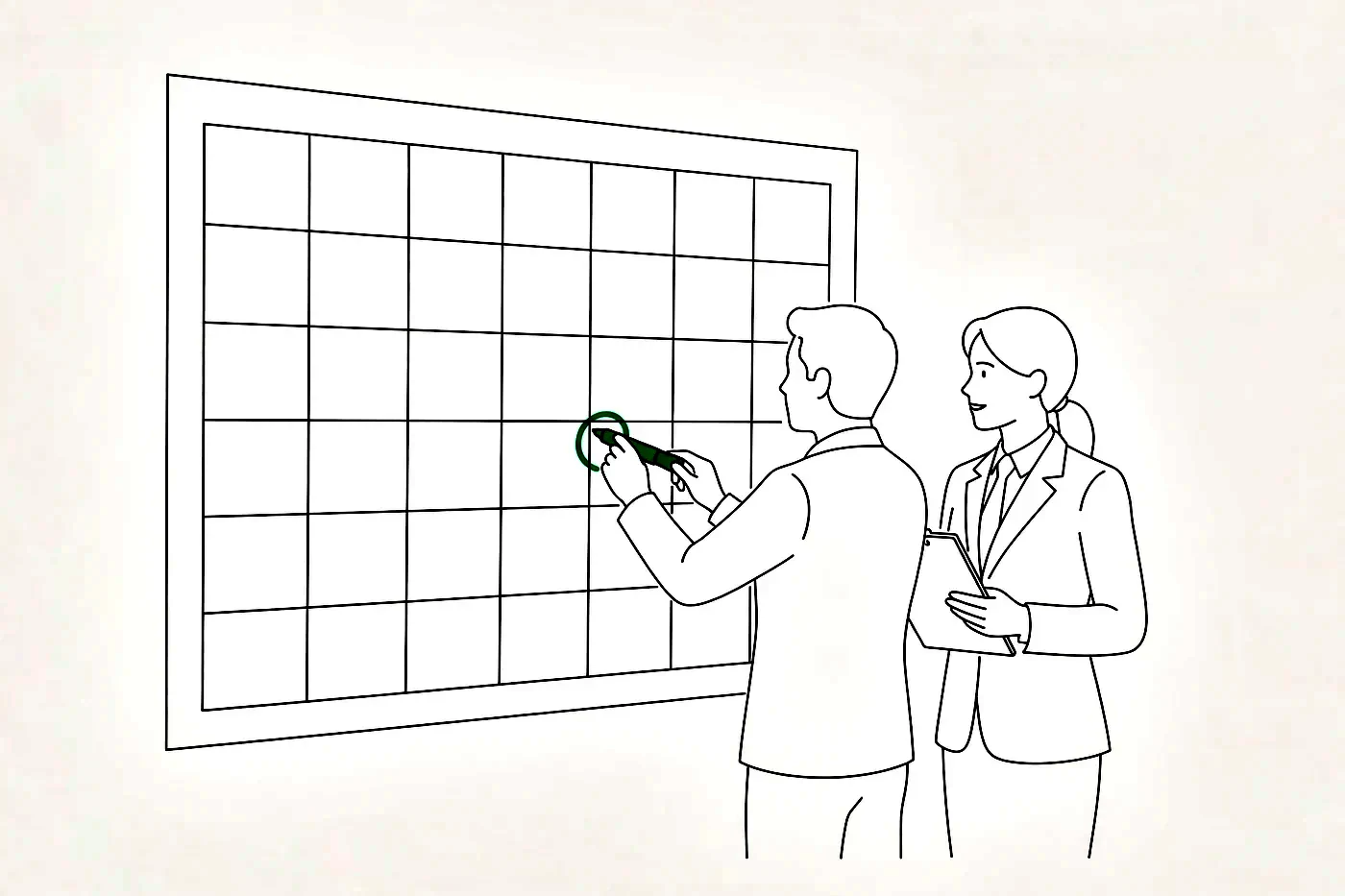
    Ink drawing: two colleagues at a large wall calendar, one circling a single date near the end of the month while the other watches with a clipboard.
    The last day is agreed before the first invoice.
  3. Weeks two and three

    Tests and gates

    Tests around everything that stays, and a review gate on every change that ships. You keep releasing to your customers the whole time.

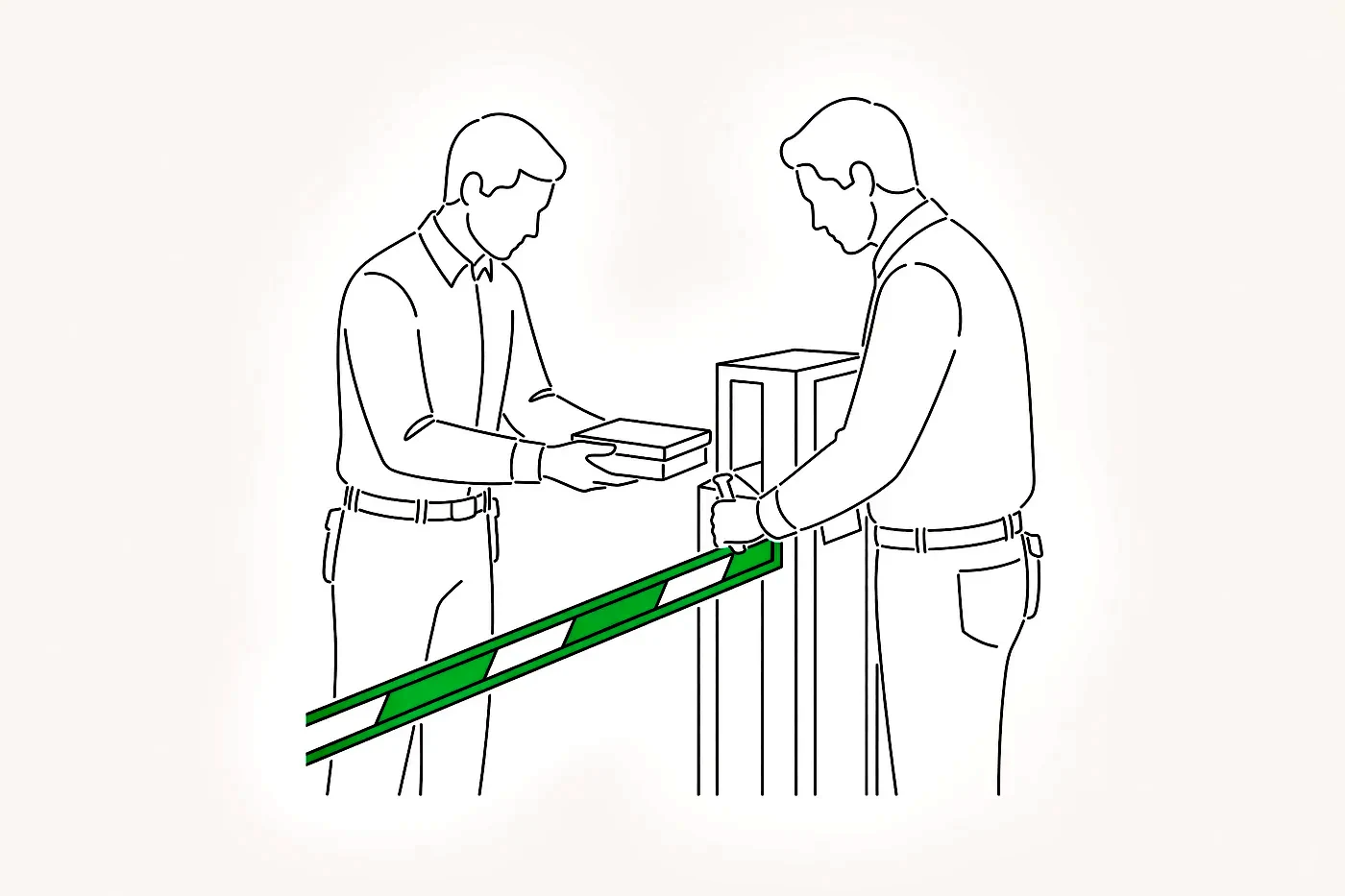
    Ink drawing: two engineers at a checkpoint barrier, one holding a small box up to be checked before the barrier lets it through.
    Nothing ships until the gate lets it through.
  4. Week four

    Real load, then handover

    We run it under the traffic it will actually get, fix what bends, and hand it over. We leave on the agreed date, and what we built stays: the tests, the gates, the delivery setup, the written notes, and the agents we ran the month with — configured for your codebase, in your repository, yours to keep running. Your team keeps releasing with them after we are gone.

    Ink drawing: two people shaking hands over a desk while a set of keys changes hands; a closed laptop and a tidy stack of folders are left behind on the desk.
    We leave on the agreed date. The work stays.

Record 04record.type = case
measured = effect on people
identity = withheld
tools = not disclosed

Two agents the team refuses to give back

One team now has two agents doing a large share of the daily work. The change people talk about is not speed. It is that the small stuff stops queueing.

What the day looks like

Requests that used to sit for days get answered the same hour. The people on that team spend their day on the parts that need a human decision, and the parts that never did are simply done.

The question they asked

When the founder asked what it would take to switch the two agents off for a week, nobody on the team was willing.

Where it landed

They are teammates now, and no one wants to lose them.

Shape of it
Ink drawing: three people working at a long table with two plain silhouette figures beside them, working as ordinary colleagues.
Two of the people at that table were never hired.

Record 05record.type = reasoning
field = why the price holds

Why the price works

There is one reason, and it is arithmetic.

Who is behind it

One engineer is on your product for the month, full time, and you know which one before you pay. The other founder works the month beside him and owns the architecture — the shape of the database, the money path, the thing that wakes you at three in the morning.

Why you cannot hire them

Either of them, for a year, costs many times what this whole month costs. At your size that was the end of the conversation until recently — this level of person was something only large companies could keep on staff.

What changes that

You are buying one engineer’s month, not a team on payroll. Agents carry the repetitive volume — the test scaffolding, the mechanical refactors, the sweeps across a whole codebase — which used to be what ate the weeks. The second founder comes in on the parts he owns, and that costs hours, not months. That is the whole of it, and it is why one invoice reaches work that used to be priced like a hire.

Record 06record.type = people
fields = role, years
count = 2, both named

Who does the work

Two people, both named and both with a face on this page. You can look either of us up before you write a word, and the person you talk to is one of the two — not an account manager, and not a name you meet after the invoice.

Roman is on your product full time for the month — he owns it end to end and is the person you talk to every day. Ivan works the month beside him and owns the architecture. That is the whole of it: the repetitive volume is carried by AI agents, configured for your codebase, and they stay in your repository when we go.

  • Photograph of Ivan Padabed

    Ivan Padabed

    Founder · architecture and method

    Systems and enterprise architect. Software Architecture Professional (SEI, Carnegie Mellon), CISSP, TOGAF 9, Kanban Coaching Professional, Claude Certified Architect. Microsoft MVP five years running. Co-author of “Building an Application Development Framework” (Packt, 2025).

    Name shown

  • Photograph of Roman Voronin

    Roman Voronin

    Co-founder · cloud and delivery · 20 years

    Owns the month end to end, and is the person you talk to every day. AWS Certified Solutions Architect – Professional, plus Security Specialty, Machine Learning Engineer and Data Engineer. Claude Certified Architect. Co-author of “Building an Application Development Framework” (Packt, 2025). Founded the Minsk AWS community.

    Name shown

Record 07record.type = reported
source = working calls
testimonials = none yet

What founders told us

These are not testimonials. They are our account of what two founders described to us on working calls, written in the third person on purpose: we are not going to put a sentence in quotation marks that we wrote ourselves. Both asked to stay unnamed.

  • Case one

    He came to us after two engineering shops had read his code and both told him to start again from zero. Long before that — a different clock from the rewrite quotes — he had asked engineers what building it at all would take and been told six months. He decided that was too long and wrote it himself in about a week — and it was good enough that a large customer signed. By the time he called us there was a paying customer live on that code, which is precisely why starting again was the one option he did not have.

    The founder · unnamed at his request

  • Case two

    He told us that two agents now carry a large share of what his team does day to day. He had already asked the team what it would take to switch them off for a week. Nobody was willing to find out.

    The founder · unnamed at his request

Two CEOs have agreed to write statements in their own names. Those go here when they arrive, and until then we are not going to invent any.

Record 08record.type = offer
price = fixed, after teardown
renewal = none

The terms, stated plainly

The engagement has a fixed price, and you learn it in the teardown document — before the first invoice, not after. The teardown itself is zero, and the zero is not a sales call — it is the first thing we deliver, and it is complete on its own.

Teardown

$0

a written assessment · delivered, not pitched

  • We read the running code, not a questionnaire
  • You get a document: what breaks first, at what load, what that costs
  • Yours to keep and to hand to anyone — including the engineers you hire instead of us

Engagement

Fixed

one month · named in the teardown document

  • The price is named once we know a month is enough
  • The exit date is agreed before the first invoice
  • No retainer, and nothing renews by itself
  • Nothing gets rebuilt from zero

If the assessment says you do not need us this quarter, it says so in writing. That has happened, and it will happen again.

Ask for the teardown

Record 09record.type = request
fields = 4
cost = 0, obligation = none

Ask for the teardown

Four fields, and one of us reads them — there is no queue and no qualification call. You get a written assessment of your running code: what breaks first, at what load, what that costs, and what one month would change. It costs nothing, and asking for it obliges you to nothing.

A URL is enough. We will ask for repository access separately, and only once you say yes.

Plain words are fine. This is the sentence we start reading from.

$0 · no call · no obligation

Record 10record.type = questions
items = 6
mirrored = FAQPage

Questions founders actually ask

Every answer below appears word for word in the structured data of this page.

What if you break something?

Every change goes in behind tests, and the gates run before anything reaches your users. We work in small pieces, on the release rhythm you already have, so if something does go wrong it is small and it goes back quickly. In the one engagement where that was tested against a live paying customer, the customer never saw an interruption.

What happens when the month ends?

We leave on the date that was agreed before the first invoice. The tests, the gates, the delivery setup, the written notes and the agents we ran the month with stay in your repository, configured for your codebase, and your team runs them without us. That is the point of the month: you should be able to grow from there under your own power, and hire when you choose to rather than because something is on fire. If you want another month later, it is a separate month, priced the same way. There is no retainer and nothing renews on its own.

Why is there no price on this page?

Because the price is named in the teardown document, once we have read your code and know that one month is enough — and it is agreed before the first invoice. What we can state here is its shape: you are buying one engineer’s month, not a team on payroll. AI agents carry the repetitive volume that used to eat the weeks, and the other founder comes in on the parts he owns for hours rather than weeks. That is the entire sum.

Who actually does the work?

One engineer is accountable for the month, and that is the person you talk to every day. Beside that engineer is the other founder, on the parts he owns, and a set of AI agents doing the volume. There are two of us, both named on this page, and nothing is handed off to a third-party firm.

How can the price be fixed before you have seen our code?

We see it first. The teardown is a read of the running code that ends in a written assessment. If a month is not enough for what we find, we tell you that in the findings instead of taking the money. The price is only named once we already know it fits.

Will our customers notice anything while you work?

They should not. You keep shipping through the whole month, releases go out on your schedule, and the work lands in small pieces behind tests. In the one engagement where that was tested against a live paying customer, the customer went through the whole month without an interruption.

Record 11record.type = the record itself
format = JSON-LD
reader = human or agent

The same page, in the form an agent reads

Roughly half the visitors we expect here are not people. This is what they get: the offer, the terms and the six answers in one block — the commercial facts, word for word. The cases stay out of the graph by design. It is not a copy — the panel below renders the one graph that sits in the head of this document.

script type="application/ld+json"  ·  Organization, Service, Offer, FAQPage


The structured data is in the application/ld+json block in the head of this page. The same facts in plain text: /llms.txt.

Plain text version
/llms.txt — the same facts with no markup
Cross-check
fixed, after the teardown  ·  0 USD teardown  ·  identical above and below